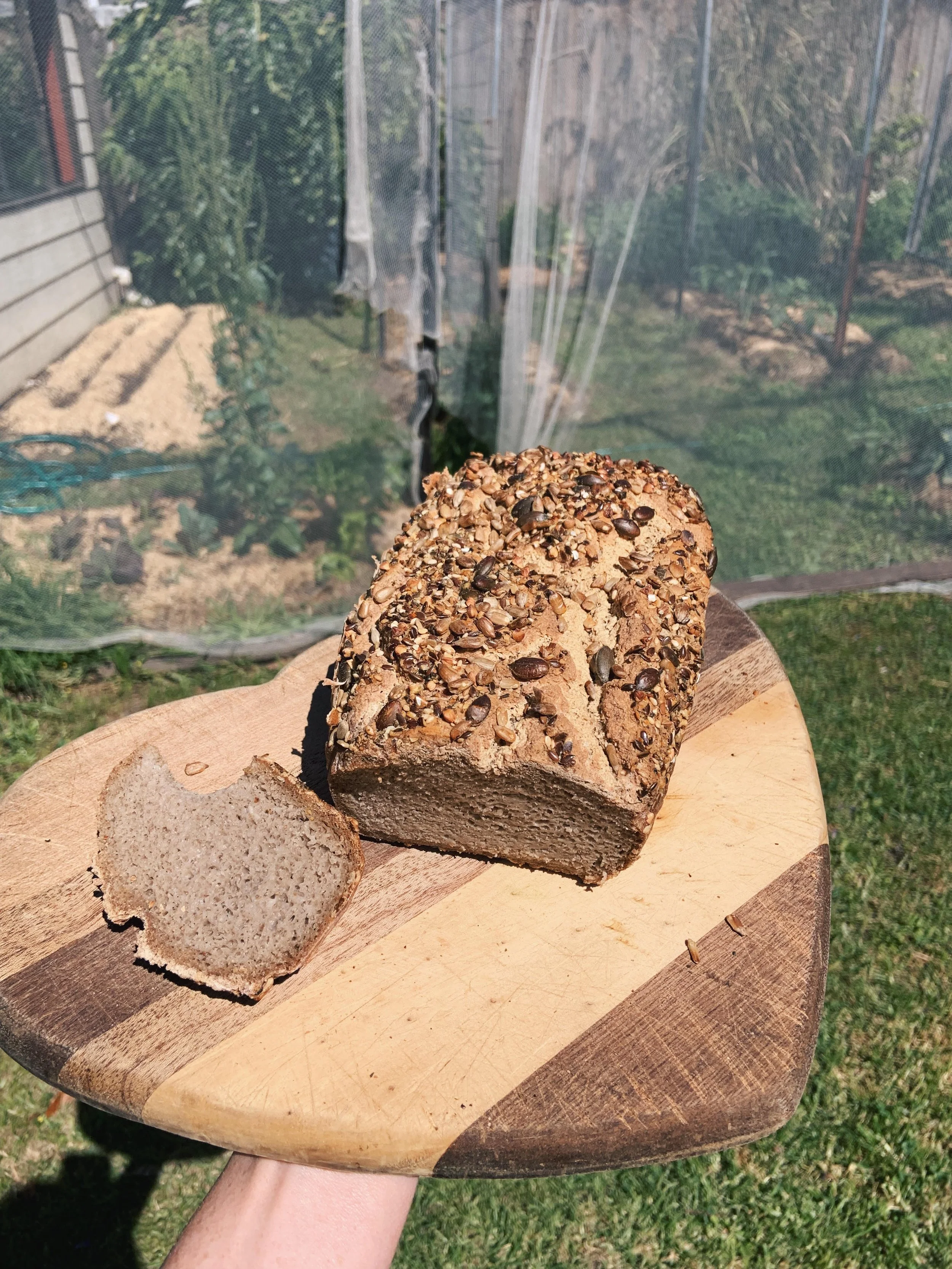
Fermented GF Bread Recipe
This fermented bread is not your standard sourdough. The process of making it is nothing like traditional sourdough - hence why I won’t call it sourdough (although it is sour). It’s high in protein and fibre and has a beautiful complex, savoury & herby flavour.
This recipe has been adapted from @ambroias.table
Ingredients
Bread - makes 1 loaf
1 1/3 cup of buckwheat groats
1 cup filtered water
2/3 cups of teff flour
1 tablespoon chia seeds
1 tablespoon psyllium husks
1 teaspoon salt
1 heaped teaspoon ground fenugreek seed (optional)
1 heaped teaspoon celery seed (optional)
Seed Mix -
1 part sunflower seeds
1 part pumpkin seeds
1 part white sesame seeds
1 part nigella (black cumin) seeds
Note on the seed mix:
I usually make a large amount (1 cup of each seed) and store it in a large jar so it’s ready to go.
All you have to do to make the seed mix is combine all the seeds in a large bowl, mix well, then store in an airtight container.
Procedure
Put the buckwheat groats in a bowl and soak in water (doesn’t have to be filtered) for at least an hour or two. I usually soak them overnight.
Once soaked roughly strain the buckwheat (do not rinse). It’s OK if there’s still some viscous liquid with the groats. It actually helps the bread ferment, so don’t try to get rid of it!Blend 1 tsp chia seeds with 1 cup of filtered water on high for 1 minute or until you have a “water chia smoothie”
Add the remaining ingredients and blend on high until smooth.
Line a bread tin with baking paper then cover the bottom with the seed mix. Pour your bread mixture into the bread tin and cover the top with the seed mix
Cover with a clean tea towel and leave on a windowsill or some place warm.
Leave to ferment for 6-48 hours depending on the climate you’re in. Usually 24 hours will suffice.
If it’s been 48 hours and it doesn’t look like your bread has risen score the top of your bread and cook it anyway. It will likely rise in the oven. This might happen in the winter months.
Put your bread in the oven and set it to 180 degrees (do not preheat your oven!) for 1.5 hours. After one hour, take your bread out of the oven and pop it out of the tin, remove the baking paper and put it back in the oven upside down to cook the bottom.
After cooking the bread allow to cook on a wire rack before putting away
Notes
If you can’t find teff flour, you can use buckwheat flour, or quinoa flour. Alternatively you can soak 2 cups of buckwheat groats and not add any flour.
If you don’t want a savoury flavour to your bread, remove the fenugreek and celery seed. You could sub in fennel seed if you like aniseed flavour.
If you don’t have baking paper, oil the tin and pour the seeds on the bottom.
If you don’t want a seedy bread, you can just use the baking paper.
I use a bread bag to store my bread. Lucia from @ambrios.table suggests storing the bread in the fridge for easy cutting experience, but i have never had an issue cutting bread that isn’t stored in the fridge.
If you won’t use the bread within a week of baking, store in the fridge for longevity.